We live in a society where obesity rates are constantly rising, physical exercise is scarce, and diets are not entirely healthy. One of the main problems is the lack of information about food and nutrition, as well as the misleading advertising we encounter daily. Understanding this, nutritional food education through food history books plays a fundamental role in our society. It is responsible for changing the population’s unhealthy lifestyle habits into healthy ones.
What do food education books consist of? These books not only include nutritional information but also have an action-oriented approach that facilitates the voluntary and natural adoption of eating habits that promote well-being.This is a process in which one learns to choose and enjoy all foods, understand the recommended frequency and quantity of each, and grasp the benefits of consuming them for the body. It allows one to learn about various culinary preparations and acquire cooking techniques, fostering an analytical attitude and greater awareness of what the food industry offers. All of this can be achieved by promoting various types of activities within family, educational, and industrial environments.
Why Food History Books Continue to Inspire Readers
Culinary practices—a central theme for archaeologists and anthropologists—have only occupied the peripheral place reserved for daily life in major historical works. But over the last half-century, alongside the widespread interest in gastronomy and nutrition, histories of products, regional cuisines, and culinary traditions have multiplied.
With the new millennium came the moment for synthesis. Since 2000, at least ten major histories of food have been published, including excellent food history books.
Food education books are widely circulated and shape the culinary history of humanity with a simple scheme of major stages, developed with elegance and a wealth of anecdotes and colorful details. This is a complete history of humanity whose focus is not, as in the past, on states and their wars or social classes and their struggles, but rather on cuisine, gastronomy, and nutrition.
At the heart of ideas about the sacred, the human, and the cosmos, culinary norms, such as sacrificial banquets, are placed, expressing, in different ways, cosmic unity and hierarchy. Culinary arts encompass four major aspects: the available raw materials; their processing through heat, fermentation, or boiling; the appreciation of flavors, which transforms food into gastronomy; and finally, culinary philosophy, which connects food to the major spheres of social and cultural life.
Over the centuries, food education books show how different food traditions have converged—through transfers, impositions, and emulation—into a common current that integrates culinary cultures while simultaneously enriching their unique characteristics. In this long process, which continues to this day, the author identifies two major turning points.
What Can We Learn from the In Defence of Food Book?
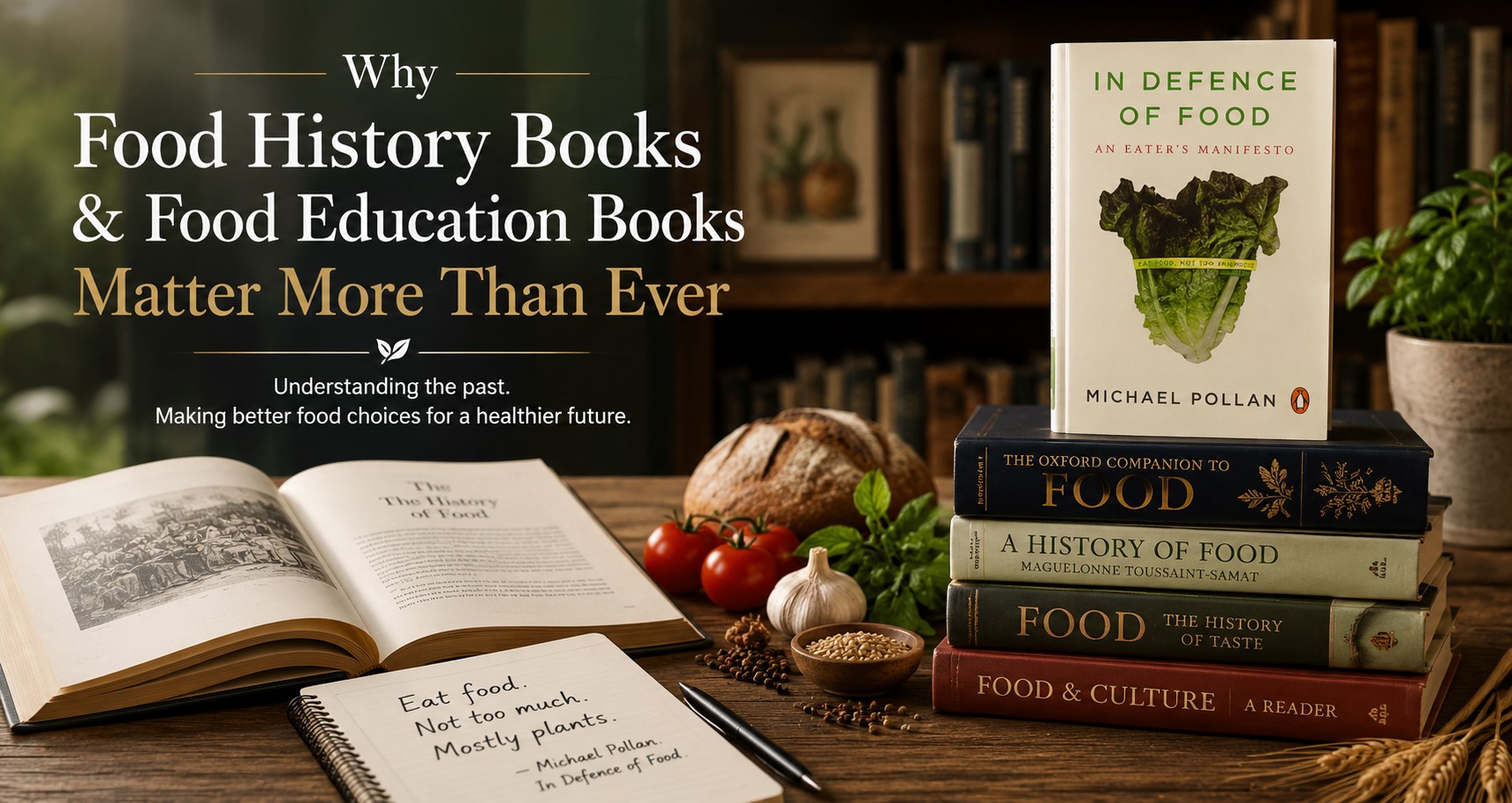
With In Defense of Food, Michael Pollan offers a new (and very old) answer to the question of what we should eat, which boils down to seven simple but liberating words: “Eat food. Not too much. Mostly plants.”
New Yorker Michael Pollan is a journalist, but he surely knows more about nutrition than any of us, who know so much about calories, omega-3, or saturated fats. Not to mention professional diet charlatans, fatuous nutritionists, and sell-out medical-scientific associations (of pediatricians, for example). This is what he thinks about the “science of nutrition.”
After years of research, Pollan realized that “the answer to that supposedly incredibly complicated question—what should we eat?—wasn’t complicated at all. In fact, it could be summed up in just seven words: Eat food. Not too much. Mostly plants.”
A New York Times bestseller, this book is written with Pollan’s usual wit, clarity, and brilliance.
Why Food Education Books Are Important for Young Readers
Nutritional education should begin in childhood, as this is the stage where healthy eating habits are established to accompany us throughout our lives, allowing us to enjoy a healthy existence and, in many cases, be free from diseases resulting from malnutrition and undernutrition. Therefore, it is essential to emphasize nutrition education and introduce our young readers to books on food education.
Today, the family and the school, along with food education books, are responsible for providing adequate nutritional education, offering valuable tools for building healthy eating habits, and promoting healthy lifestyles. We need a food culture that makes us aware of the importance of food, a basic human need.
In food education books, the science of nutrition aims to help people make informed choices about their diet. Nutritional education provides information, knowledge, and training in nutrition. It is therefore a great success when significant changes are achieved in eating behaviors and practices. In this sense, we can talk about educational strategies that aim to voluntarily teach behaviors related to food. These are beneficial for the health and well-being of the body and mind.
Behind The Bar Code by Paul Hesketh

“Behind the Barcode” uncovers the surprising histories and secrets behind everyday supermarket foods, revealing how familiar products like bread, coffee, and ketchup became global staples through invention, rivalry, and unexpected twists.
The author draws on a vast and comprehensive body of information about food, dishes, and ways of eating. Hesketh classifies this information into a rigorous framework that articulates the diverse dimensions of culinary art. Finally, he sets everything in motion and constructs a narrative—a comprehensive story with real global reach. That’s no small feat.
How Food Knowledge Shapes Better Choices
Although it may seem hard to believe, there is a connection between mind and food, so our daily choices about what and how much we eat are intrinsically linked to psychological, social, and emotional factors. In fact, various studies in neuroscience and behavioral nutrition show that, beyond hunger, our minds play a key role in our eating habits.
There is a complex relationship between nutrition and brain function, starting with the fact that the foods we consume influence its development. Furthermore, there are brain structures that participate in our eating behavior:
- Hypothalamus: This is a part of our brain responsible for various functions, including controlling food intake through the sensation of hunger or satiety.
- Limbic System: This part of the brain is responsible for directing emotions and behavior. In the case of food, the limbic system regulates what we eat, generating a feeling of pleasure when we eat.
- Prefrontal Cortex: The prefrontal cortex is related to food choices, as well as when and where to eat, and is therefore also closely linked to our eating behavior.
It’s also worth noting that this region of the brain can be affected by factors such as stress and anxiety.
Hormones that influence what we eat
Another connection between the mind, body, and food lies in the hormones we produce. Some of these chemicals are responsible for increasing or decreasing appetite and processing our body’s energy. Among these hormones that influence our eating habits are: ghrelin, leptin, dopamine, and cortisol.
When we crave something sweet, it’s a clear example of how hormones work in our bodies, with cortisol signaling the brain to regulate our blood sugar.
Emotional eating is defined as an eating behavior characterized by consuming food with the goal of managing emotions such as sadness, hopelessness, or anxiety.
- It involves eating not out of hunger, but out of emotional need.
- It can be related to depression. Emotional eating can be linked to choosing unhealthy foods.
- Another factor related to eating behaviors is the environment, which can sometimes trigger a hunger signal in the body, even when food is not needed at that moment. This can be related to the family environment, customs, and food marketing.
Conclusion
Understanding the importance of nutrition and its connection to the mind is crucial for you and the community, as is the support of doctors, psychologists, and nutritionists. Food education books seek to help people make informed choices about their diet and involve families, schools, and the community. Food history books range from providing information about foods and nutrients to offering tools that will help us take action to improve our nutrition.
Frequently Asked Questions
- What are food history books?
Food history books help shape the identity of each people; it depends on agricultural production techniques, social structures, dietary and religious beliefs and their corresponding precepts, worldview, and a set of traditions slowly developed over the centuries.
- Why are food education books important?
Food education books play a fundamental role by helping change bad lifestyle habits into healthy ones.
- What is the In Defence of Food book?
In Defense of Food – An Eater’s Manifesto, by Michael Pollan, has three parts: A reflection on nutritionism: the reduction of food to its nutrients, which is good for those who process and sell food but not for consumers. An analysis of the Western diet and the diseases of civilization: it highlights that diabetes, obesity, heart disease, and some types of cancer go hand in hand with the consumption of processed foods instead of natural foods. How to escape nutritionism: Here, the consumer’s manifesto is broken down. How to return to healthy eating.
Is Behind The Bar Code educational?
On October 16, we celebrate World Food Day, a perfect opportunity to reflect on the importance of a balanced and mindful diet. To help you delve deeper into this vital topic, Behind The Bar Code provides valuable insights into food and health. Paul wants you to feel good inside and out by improving your diet, your relationship with food, and your understanding of your gut microbiota.